
The importance of a peer community for my daughter with Dravet syndrome
Why I've pushed for my 10-year-old to be included with her typical peers
Written by |





When my daughter Avery was diagnosed with Dravet syndrome at just 10 months old, I wondered what her life would look like. I knew it would be different from that of her peers, particularly as she grew older. Some of my greatest questions became: Will she have friends? Will she be accepted by her peers? Will she enjoy typical, meaningful relationships?
Every parent wants their children to find those people who will love them unconditionally and give them permission to be unapologetically themselves. For my older children, friendship was sometimes hard, but it also came naturally from interacting with kids their own age at school, through sports, and in other extracurricular activities. I hoped that my sweet Avery’s differences wouldn’t prevent her from finding community and friendship.
This is why I advocated for inclusion above everything else. It wasn’t always easy or smooth, but from the time Avery was young, I requested that she be included with her typical peers as often as possible. This wasn’t always the popular choice and, at times, went against what educational experts might advise, as it sometimes meant choosing between the most inclusive environment and the one most accommodating to her disability. While in a perfect world, both should coexist, this has not always been our experience.
There were times when I pushed for her to stay in a classroom with her typical peers, even when the atmosphere was a bit overstimulating or the content was beyond her understanding. As a parent, of course, I have questioned if this is the right move, but on a recent field trip, I saw the results of this inclusion: My daughter with Dravet syndrome has a community.

Finding her tribe
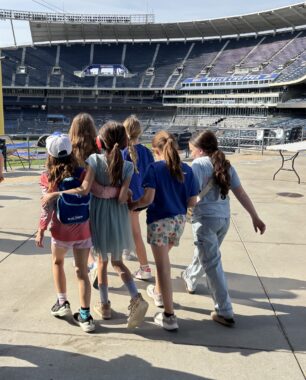
Avery walks side by side with friends from her fourth-grade class. (Courtesy of Sarah Lango)
Avery is in fourth grade now, but she doesn’t communicate like other kids her age. Her abilities have prevented her from participating in many extracurricular activities with her peers. She is nowhere near a fourth-grade level academically. But it was evident she was knit into the fabric of her class in every way that mattered.
Avery has been in classrooms with many of these kids since kindergarten. Some have witnessed her having seizures and have seen her struggle with things that come easily for them. But they are not shocked by her differences because they have grown up alongside her. It was clear that, to them, Avery is just Avery, not a kid with a disability.
On this field trip, I watched as members of her class walked alongside her, held her hand, and included her in the group photo. It did my heart so much good to see the other 10-year-olds help her up and down the stairs, cheer her on, talk with her, and show genuine concern that a seizure trigger could create an unsafe environment for her. They had become more than just classmates.
Witnessing Avery walk alongside her girlfriends, as any other little girl would, made me feel justified in all those moments when I advocated for her to stay in rooms with her peers. I feel strongly that this decision has allowed her to build this tribe of supportive friends, who will have the opportunity to continue being her community into adulthood. I recognize that this might not be the right decision for everyone who has a child with a disability, but for us, forming these relationships feels like the most important way for our daughter to live her best life long term.
Note: Dravet Syndrome News is strictly a news and information website about the disease. It does not provide medical advice, diagnosis, or treatment. This content is not intended to be a substitute for professional medical advice, diagnosis, or treatment. Always seek the advice of your physician or other qualified health provider with any questions you may have regarding a medical condition. Never disregard professional medical advice or delay in seeking it because of something you have read on this website. The opinions expressed in this column are not those of Dravet Syndrome News or its parent company, Bionews, and are intended to spark discussion about issues pertaining to Dravet syndrome.


Leave a comment
Fill in the required fields to post. Your email address will not be published.